
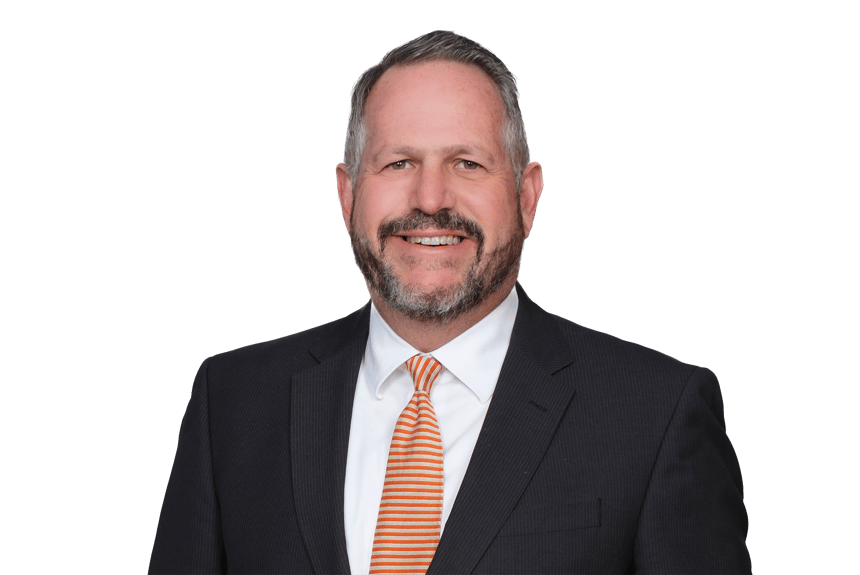
.

The New Trap Doors in Employment Litigation

December 28, 2023

by Kent J. Schmidt, Nisha Verma, and Heather Dillion

Download as a PDF

Share this page

One of the most evolving and dynamic categories of litigation risks relates to a company’s employees. Crewmember litigation is what we refer to as the fifth C of the Five Litigation Risks. Each year, new legislation is signed into law and landmark decisions are issued, broadening this risk and the duties of employers to employees. Invariably, the scope and nature of the risk increases, as the trend is to provide employers with more protections. Metaphorically, the trap door on which employers may unwittingly be standing may spring at any minute with a new litigation claim.

In this encore episode, California-based Dorsey Partners Nisha Verma, Heather Dillion, and Podcast Host and Partner Kent Schmidt return to SharkCast to highlight trends on the horizon and offer practical insights on how to navigate these litigation risks. Among other topics, this episode discusses cannabis in the workplace, workplace violence prevention, regulating debates among employees on political and social issues, and new trends in wage and hour litigation.
 

This podcast is not legal advice and does not establish an attorney-client relationship or create any duty of Dorsey & Whitney LLP or those appearing in this podcast to anyone. Although we try to assure that the content of this podcast is accurate, comprehensive, and reflects current legal developments, we do not warrant or guarantee those things. The opinions expressed in this podcast are the opinions of those appearing in the podcast only and not those of Dorsey & Whitney. This podcast is considered attorney advertising under the applicable rules of certain states.

Transcript

Voiceover
Welcome to another episode of the Shark Cast on Litigation Risks Management, where we explore why businesses are so frequently sued and how to mitigate and navigate the dangers lurking in these risky waters. Join us now as we welcome our host, Kent Schmidt, litigation partner at the law firm of Dorsey & Whitney.

Schmidt
Welcome to another episode of Shark Cast. I really like to begin Shark Cast by talking about any unusual aspects of an episode, including milestones in the short history of this podcast and today we have another milestone. We covered a number this year, including our first international guest several weeks ago but this is the first time we’ve had what I’m calling an encore episode, back by popular demand. You know, you got to give the people what they want. I have my partners, Nisha Verma and Heather Dillion, joining me here in Southern California to talk about one of our favorite subjects, a subject that certainly is reflective of how often companies are sued and that is of course Labor and Employment Litigation. If you missed our earlier episode, we focused a little more specifically on the post COVID world and some of the challenges that that brings to Employers in Employment Litigation claims and adapting their policies and practices to the brave new world in which we live, but the world moves on, and one of the interesting things about Employment Law is how nimble it is to whatever the issue or controversy or trend is of the day, and certainly COVID was reflected of that. You saw all sorts of new COVID legislation and new theories that came about by employment lawyers as a result of COVID, but all sorts of new trends and new phenomenon are occurring in our society today. So I thought we would talk about some of those and what changes those shifts in our society and new emphasis bring to employment litigation risk. So first of all, thanks both of you for agreeing to come back to Shark Cast and congratulations on being the first encore guest.

Dillion
We are honored. Thank you for having us.

Verma
Great to be here.

Schmidt
All right, well, let’s jump right in. I would first like to address something that used to be somewhat unique to a handful of jurisdictions, including I think first Colorado and then California, but now is spread to I believe half or close to half, maybe over half of the U.S. states and that is the legalization in some form or another of cannabis. Many jurisdictions, such as California, begin with medical use of cannabis being permitted and then move thereafter into recreational use. Other states go straight to recreational use, but in California, we are dealing more and more, with the various implications of legalized cannabis and somewhat increasing popularity of cannabis use, and that bumps up against certain employment practices and employee policies. So using California somewhat as a catalyst, but also to the extent you want to comment on other jurisdictions, how is the use of legalized cannabis in a particular State impacting employers rights and obligations.

Dillion
It’s impacting it quite a bit, I mean there has been a big shift change into the overall appetite, if you will for cannabis or ability to be okay with it, it used to be so in taboo, and when I was in law school, which was a little over 10 years ago, I remember California had a bill and it was shot down to legalize cannabis and now here we are, advising employers on what they need to do because it’s legal here in California. Cannabis is interesting because it’s very different than alcohol, right? Alcohol you could have a breathalyzer and it’s, hey, you are you are over the limit currently. You are currently under the influence, at this minute…

Schmidt
At this minute.

Dillion
…under the influence of this, there is some leeway way there, but of this substance. With cannabis, you have this THC that stays active in your system, for it could be over a month, so someone could have used cannabis and then three weeks down the line get tested for it and show up positive even though they were not under the influence of it at that time. So it’s the psychoactive aspect of THC that California now says employers can care about. So what that means is California now, as of as of January 1st, employers cannot make an employment decision based on a non-psychoactive identification of cannabis. So meaning you can only use tests that show that the psychoactive portion of cannabis is present, meaning that they are currently under the influence of cannabis.

Schmidt
So I want to make sure I understand this. If I’m operating a small business in California and for whatever reason, social reasons, or drug history in my family, I voted against, you know, the legalization of cannabis when there’s a proposition in California, I don’t like cannabis use. I think it’s one of the bad things in our society. I cannot bring that personal view and policy to my workforce and say, you know, we’re still a drug free work zone. No cannabis users.

Dillion
Well, that was kind of a loaded question there. There’s two parts, right. The first part I thought you were going to say this, I don’t ever want anyone to ever be able to use cannabis.

Schmidt
On the job?

Dillion
No, that stays, on the job is fine. You are, employers can still have a drug free and alcohol free and violence free workplace. It’s that you cannot, and this is where I kept saying the psychoactive sounded a little bit like a biologist there, but the psychoactive versus non-psychoactive aspects of THC so you cannot make an employment decision for an employee based on the presence of non-psychoactive THC, which means at some point in time they have used marijuana. But was it being used at the workplace.

Verma
Or at the time they showed up for their drug test, which could be like 5 days before they started work, right? But if your applicant is responsible enough to not be impaired or have used recently enough for their drug test at which they’re not working yet, but they know they’re what’s happening then that is essentially what we’re looking at. Can your applicant plan ahead enough to make sure that they have not been impaired any time right before their drug test as opposed to, can your applicant plan ahead enough to make sure they’re not using, taking an edible five weeks before their drug test, which is the old system. Either way, you’ll never know whether the person doesn’t use marijuana like you’ll just know what was captured at the moment in time test.

Schmidt
So everything you’re talking about really is about is the liability is triggered by the drug testing and decisions on employment made based on drug tests.

Verma
Correct.

Schmidt
Is that correct?

Verma
And what California is saying now is that if you are going to drug test for marijuana, you need to make sure you are using a test that only identifies or that at least marks out that this is the psychoactive THC. They exist. The tests exist, they’re not as commonplace, but I imagine with it becoming legal we’re going to see it more everywhere, because we want police officers to be able to find out. Is this person impaired while driving? You know, let me figure this out right now. So that’s really the change in it is that you cannot make an employment decision based on a non-psychoactive aspect of marijuana. Think about it as, think about it with alcohol. If I had a drink two nights ago at dinner. Are you and I’m interviewing with you right now. Are you going to deny me an employment because I had a drink two nights ago? No, and that’s kind of how it is. If I had an edible two nights ago, is that something that is gonna, you’re going to deny my decision based on now.

Dillion
Or five weeks ago? Before you applied for the job to be fair, 5 weeks ago, before you applied for the job or knew the job existed. Or had any interest in it, right? Like that is what the old system was hatching.

Schmidt
So let me go back to my question. Not the first time I’ve been accused of asking a loaded question, but let me revert to that and say, let’s suppose in my scenario I’m not going to do any drug testing, but I just make it clear we’re a drug free zone. It’s still illegal on a federal level. It’s still a listed narcotic, it’s a listed substance, and so I say, I don’t know. I don’t care what California is doing, I want a drug free zone and if I hear about someone using marijuana, even recreationally, even on the weekend, I’m not interested in you to continue to work at my small business.

Verma
Yeah. The law directly addresses that because while the more often talked about provision of the law addressing drug testing is what we were talking about a moment ago, and that’s what’s in the media more that’s what’s in discussion more it is still prefatory. It is still a prompt that an employment, an employer cannot make a decision based on the person’s use of cannabis off duty and off site.

Schmidt
Let me pivot the question then a little bit. So I’m a prudent employer. I understand I can’t expressly make a decision, but I’m very concerned about drug use and my employees being impaired on the job. I’m not going to do any testing, but I know when someone’s high, I’ve been around the block of time or two. Can I make an employment decision based on my perception?

Verma
I would do the test. I don’t mean to cut off your question, but why wouldn’t you? I would do the test. Before 2188, right AB 2188, pre-employment testing has been legal in California and there’s always been the right to test for reasonable suspicion or post accident. So if you’re saying that there’s objective criteria, typically we want by two separate managers have seen that the person’s impaired, then what I would do in that situation is require a drug test, which was perfectly legal before and after 2188, and only test using the 2188 standards…

Dillion
The active.

Verma
…that Heather was describing, and if your suspicions are correct, it will come back positive and fire the guy, done.

Dillion
There’s also another test that’s allowed. It’s called the impairment test, but you really have what you have to do is take a baseline measure of all your employees. So we see how you are today.

Schmidt
Maybe he acted like they were high before but before.

Verma
Right, just come in, blubbering idiot, you save that job, use that as your baseline, but you can. So there is another way to do it. I think it’s dangerous. The impairment test I think really allows for a lot of personal biases to come in. So I would not advise towards that. But if you see someone clearly impaired by whatever it might be it’s that you can still potentially have grounds for termination.

Schmidt
So let me bottom line this, if you’re going to start focusing on or making employment decisions or you face an issue of impairment from cannabis, or any other substance for that matter? You may have some rights as an employer, but tread carefully. Get some legal advice. Just don’t go making decisions that instinctively feel like, yeah, this is this is the right decision to make, right?

Verma
I would say that was so much with so many things. I feel like a lot of our instincts as business owners tend to be very personal and yeah, use your counsel.

Dillion
Second, I second.

Schmidt
And with cannabis is sort of understandable since it’s still illegal on a federal level, so when you say…

Verma
It is, but for how long?

Schmidt
…yeah, well, we’ve been hearing that for a few years. Well, let’s pivot to another issue relating to the workplace and relating to what is happening in our society and it’s the it’s the sad reality of workplace violence every several weeks or a month or so, you turn on cable news and you see some other act of violence that occurs in our schools or in our workplace and obviously, we’re going to focus on the workplace. What are legislatures doing to address workplace violence, particularly in California?

Verma
California has a new OSHA standard, which is first in the nation, specifically addressing workplace violence. A little bit of background, right? Federal OSHA governs workplace safety. There are a number of states that have special permission from federal OSHA to run their own state program. California State program has been tasked with addressing workplace violence and putting in specific rules around that, and not just general safety for years and those rules have been unfinished and we’ve had a very active legislature this year and one of the examples of that is a legislator just stepped in and said I know how long you guys are going to take, sick of waiting. I want my own rule. I like this rule and that’s where we are right? So was this drafted by people who have been working on it for six years and have every insight into workplace safety, no? This happens through the political process.

Schmidt
Somewhat reflexively and reactively, which Sacramento is just famous for.

Verma
Sure, and in this case, I completely understand the legislature that sponsored this bill had a mass shooting in his district, at a workplace and I’m thinking of one. There were probably more than one and so that’s how we got here and we didn’t, this law did not get passed without controversy because you may have heard of this law previously as the one that legalizes shoplifting in California. So a couple of reasons that’s not possible. It’s not a criminal law. It’s a workplace standard law. However, there was a provision early on that said, that prohibited employers from requiring individuals to confront shoplifters and that drew heavy opposition from business leaders, small business leaders, eventually was pulled, and after that we ended up with this workplace safety standard.

Dillion
There’s a lot of misconception about that, that the California passed a, “You cannot do anything about your shoplifters”, but that’s not true. That’s not the version that finally went through.

Schmidt
Okay, so where is the law today, and it’s going to be effective and in place January 1st?

Dillion
Actually July.

Verma
July.

Schmidt
July. July of 2024.

Verma
2024.

Schmidt
So what solution has Sacramento come up with that is going to address workplace violence, and what does it mean for employers going forward after July 1st?

Verma
I could say objection assumes facts, not in evidence …to the to the term solution, right?

Schmidt
Another loaded question.

Verma
I think there’s questions around how solution oriented the ultimate policy is here, and so I’ll tell you exactly what the three prongs are, right and the three new requirements are, a workplace production plan that is, you know, technically a piece of paper, but I would hope employers make it a little bit more live and interactive like than that. A log in which someone has to record all workplace violence incidents and then specific training that addresses both the plan and the law. So my concern around results here is that this creates a lot of homework, a lot of ticking off of boxes to get…

Schmidt
Record keeping.

Verma
…record keeping to keep to get the plan exactly perfectly right that there is the possibility that whoever’s tasked with that will feel so proud of themselves when they’re done, they’ll just put in a binder and there it goes away and will that make anybody’s life safer? Will that save a life? Right, and so I think that employers have to do a lot of work here but not lose sight of the goal, not lose sight of the fact that this is actually important to their employees.

Schmidt
So when you make a plan, what are the basic components of what you’re referring to as the workplace violence plan?

Verma
Yeah. So this is one of those statutes that goes all the way down to like, “z”, but that the highlights are the place, so there’s already a requirement to have an injury prevention, illness and injury prevention plan. Their players are subject to. As separate from that or and kind of appendix of that plan, they need to have a specific workplace violence prevention plan that hits on a lot of topics, including how to alert employees regarding emergencies, how to identify and resolve existing workplace hazards. But what I think is interesting about this because look, there’s a lot of requirements, somebody who’s very smart can figure all that out right? But I think what’s interesting about it and this is going to come up again, because it’s a theme in this legislative session, and nationally is almost bargaining level relationship with employees on what they want around this, because this law specifically requires that the plan include active involvement by the workforce, supervisory and non-supervisory and developing the procedures.

Dillion
So you can’t just have someone sitting in an ivory tower determining what is going to happen for their company?

Verma
Right.

Schmidt
All the staples involved, including the rank and file of employees that are having some sort of contribution to the plan.

Verma
Correct, and we do expect Cal OSHA to release some sort of blueprint as to what this should look like. You know, how detailed will it be. We don’t know yet, but we are expecting them to roll out some sort of example soon.

Schmidt
Yeah, I can think of all sorts of litigation, perhaps not directly related to this. This is going to start bumping up against these type of issues, privacy, you know, once you start creating your record of workplace violence. What are the rights of employees to know what is in that record and what are the obligations of the employer once they create a record? Then you don’t even have defamation that comes up. You know, if I lost my cool at the water cooler the other day and someone jotted it down in the workplace violence log. Then I have some sort of defamation claim, is there any immunity for recording these, by the employer?

Verma
So to answer your access question first, yeah, the access is broad, so the workplace violence log, which I’ll describe in a second, ultimately can’t be accessed by employees, and employees have to be trained on that. There’s requirements that the information has to be prepared in a way that doesn’t identify anyone. But look, if you only have one water cooler and you only have one guy that loses it at the water cooler, then that information of what happened is without that person’s name or other identifying characteristic, it’s going to be there, and that’s a, that’s a reality.

Schmidt
Well, I am as against workplace violence as the next person, but I could just see a lot of litigation that comes from this record keeping requirement and perspective. This is going.

Dillion
Logistical nightmare and litigation.

Verma
Yeah I think that, you know, from a litigation perspective the fact is that it requires a significant investigation or requires conclusions as to essentially what factors led to the violent incident and I will just note them, the type of violence can include threats, and it can include a threat of what psychological trauma, right? Not necessarily harm. So I would note that I have definitely work with plenty of employers that have multiple members of their family in the workplace and you can see how something that happened at home can bubble over into work, and yeah, that usually would involve some, at least a threat of psychological trauma. So there’s a lot of thinking through about what needs to be put in the log. But then, when the person is, when this designated person, and I would recommend it be one person, is preparing the log while they need to be thinking most importantly about what this says about the culture of the workplace, what this says about safety overall, unfortunately in the back of their head, they have to also be thinking about litigation because obviously this is discoverable and it’s kind of requiring an admission as to aspects that could have prevented this incident that you are now describing in detail.

Schmidt
That’s a scary proposition, that you’re going to record something that could later be used against you in a workplace violence claim or other type of claim ranging from defamation to just wrongful discharge. But maybe that’s, maybe there’s no solution to that.

Verma
We’ll see. Give it some time, I mean hopefully we’ll figure it out and there needs to be kinks or changes that they work.

Dillion
I mean, I think you’re going to ask about this in a little bit, just in terms of speech in the workplace and what can be discussed in the workplace and everything so this is just, you know, this is just another example of almost everything being out in the open.

Schmidt
Speaking of all these interactions among employees and heated conversations that may be, arguably in some instances, clearly in others, rise to the level of workplace violence, obviously our society is becoming more and more polarized. Issues in the news and world news, including what’s going on in the Middle East, with Israel and Gaza are causing people to bring their viewpoints into the workplace and arguments are erupt, we’re heading into an election year next year. So we have those issues also. How is an HR director or someone in charge of employment able to reduce the number of incidents that are distracting from the work in a normal employment place? I’m not talking about a news room or something of that nature, just a regular employment place. When you have people that have diametrically opposed opinions politically, or socially, or based on world events. That are arguing with each other and things are escalating.

Verma
So I’ve spoken on this topic a few times since 2020 and I have some updates in terms of what’s gone on in 2023, but my answer is there’s a certain extent where you just need to let people feel their feelings, and you need to grow a thicker skin around those feelings, and find a way to manage through and find productivity wherever you can. I think the issue of workplace speech and employees bringing their opinions relating to the outside world to work is here to stay. I also think that there is no outside world when it comes to work. For a lot of employees in the sense that they have such a strong expectation of, they have such a strong connection, or at least an expectation that their organization participate in every aspect of the outside world. As opposed to just their kind of area of commerce that most employees are not going to be willing to separate, say their expectations of their employer from what they expect to happen at work.

Schmidt
So let me again ask a semi-loaded question, pushing back a little bit.

Verma
Yeah.

Schmidt
I’m going to put myself in the small business owner position again and I’m going to say a very I think intuitive policy that I might implement. Let’s suppose I’m running a factory and I’ve had a lot of arguments in the break room, not on the line because the machines running too loud, but in the break room where they’re preparing for the next shift about politics, or about world events, and I just want to have a policy that says. Come in, you can talk about the weather, you can talk about what you did the last weekend, but we’re not going to have any more political debates or arguments in the break room or in the locker room where you’re getting ready to start your shift. Is that prohibited?

Verma
I think so. I think that you can credit conduct in the break room.

Dillion
Right, it requires civility and that you’re not screaming at each other. You’re not you know no fists are being thrown, but regarding something like political speech, I mean and under the NLRB, I think you can’t do much. An NLRB for this case covers all employers.

Verma
Correct. Meaning the conduct of yelling in the break room or the conduct of fighting whatever they’re fighting about even if it’s about, you know, Beanie Babies, it can be prohibited. I think the content is much harder to do. So there’s very specific developments under the NLRB through the NLRB, National Labor Relations Board, which some employers think only apply only to unionized employers, but the rights that I’m talking about grant employees the right to engage in protected concerted activity, meaning the right to discuss among themselves what would be in their best benefit, which you know maybe is a union, but if it’s not, it’s still protected by the NLRB. That has time and time been extended to conversations about one workplace safety, about understaffing, but also just about how is my employer responding to Black Lives Matter? That for sure has gone before the NLRB, right? And so an update from this year’s NLRB is that the kind of workplace rules you can put into effect have changed. There have always, there’s been a lot of flip flop in terms of like a handbook rule. What is an impermissible handbook rule and the standard has been tightened this year in the sense that any rule banning overly broad confidentiality policies, discussions in the workplace, taking photos in the workplace, social media about the workplace. The NLRB can challenge those or an individual employee through the agency can challenge those if they could just show that the rule has a reasonable tendency to chill employees from exercising their rights. And if the NLRB meets that standard, then the employer has to show a very substantial business interest and very often, you know, you hurt our feelings, or you hurt someone’s feelings, and I do deal with NLRB all the time, more than I like to, but almost every day, but you know, you hurt my feelings or someone’s feelings were hurt, is not a substantial business interest.

Schmidt
What about the substantial business interest of, I just don’t want politics discussed in the workplace because it’s distracting and it undermines the unity in our workforce, so we want to make this a nonpolitical environment?

Verma
So there’s already, though long before any of the recent social events we’ve been talking about, there has always been our prohibition on taking any measure against anyone relating to their off duty political conduct, right?

Schmidt
But even if it’s even handed like, I don’t want to hear from the right or the left. In other words, I’m not just saying I don’t want to hear from one political viewpoint, I just don’t want any politics in the world, that’s not permitted?

Verma
I don’t think so. If the person’s doing their job and they’re talking about politics in the break room one, their discussion of politics very well could be seen as protected concerted activity under Section 7 and second, because you know that they’re talking about politics now, you know something about their political views. So they very easily can say that you’re taking action on off duty political conduct because you’re talking about it, right?

Schmidt
So here we have another example where the intuitive common sense approach of an employer could get them into some hot water, because it seems to me and I think you would agree that a common sense approach would be let’s just have a non-political workplace, right?

Verma
I don’t, what is politics, right? Politics is not just something that happens in Washington or in Sacramento. It’s a system. It’s how our government is run, which results in rules and regulations that dictate how we act in every business, everywhere and in not businesses, at home too, right? So.

Schmidt
So it’s not just elections, it’s social issues in the world that we all live in, and so to stifle that speech, you’re running into some trouble.

Verma
But I also don’t think it’ll work.

Schmidt
It’s not possible to stop it.

Dillion
I do think that that’s what.

Verma
I also, yes that’s what I’m saying, I think I spent a lot of time talking to employers about this, particularly relating to the situation in Gaza that you mentioned, and I think that we live in an age of protest. We have been for a while that when the Hollywood Strike was happening, I could just tell my employers, my clients as shorthand. Half of LA’s on strike and you know, I made the point very like, succinctly. Kind of sad that’s over cause it’s just not so easy to make that point anymore, but we absolutely live in an age of protest and typically effort that’s seen by any employee as suppressing speech. More than likely, it’s just going to result in more speech, even if the employer doesn’t hear it all and it may also create distrust and resentment among people that aren’t even engaging in the speech that you were worried about.

Schmidt
So the medicine could be worse than the disease?

Verma
That’s kind of what I’m, that’s something that I spend a lot of time thinking about, yeah.

Dillion
I think I lean in a bit different of a direction than Nisha, just that I hear you and I believe there is some happy medium and there was actually a case recently in the news for a brochure chain where their employees were prohibited from wearing BLM masks. And the court did throw that case out and said that the grocery chain was able to say, listen, this is our, we said you have to wear a mask during, you know when COVID was at its height, or you still can wear a mask, but it has to be plain. We want absolutely plain, so they said they wanted to foster an inclusive, welcoming environment for their customers and the court agreed with them. So there, there are still potentials to say I, you know, you can’t.

Schmidt
We’re going to be neutral on these issues.

Verma
But speaking amongst one another, prohibiting them saying I support BLM, that might, that probably runs afoul.

Dillion
I am of the same mind. I tell my clients all the time. Most jobs other than being Miss America don’t require to be Miss America all the time, and I don’t think there’s very many jobs that require you to be Miss America or Miss Congeniality in the break room, and if you’re upset about something that you saw on the news today and you want to talk about it with someone, I think the break room very often will be a place where you feel your feelings, and I think employers might have to just manage through that.

Schmidt
Well, that’s very, very interesting takes on both of those issues. Let’s turn now to an economic issue that’s driving our employment matters that are emerging. We’re talking about the inflation that we’ve been living with for many months now, the cost of living increasing in and on a number of different levels and wage disparity. What is California doing to lead the nation and be the cutting edge state and maintain that reputation that there always has on wage issues.

Verma
You get more money, you get more money, not…

Schmidt
That’s right.

Verma
…Everybody gets more money though. California has been a leader in the minimum wage, I would say, with some exceptions potentially, but they have again increased their wage, their minimum wage, which is really interesting in California specifically. We’re seeing new regulations pass through on an industry specific basis. So we have hotels, we have healthcare workers…

Dillion
And fast food.

Verma
…And fast food. So three very different industries.

Schmidt
And very significant employers on the volume.

Verma
Correct, correct.

Dillion
Yeah.

Verma
And I think the healthcare one, correct me if I’m wrong, started basically after COVID and most of us were. Yes, please, give them more money, my gosh.

Dillion
Yeah.

Verma
What have they been going through? And then was hotel and most recently this past legislative session was fast food.

Dillion
So specifically, California wide, I believe the fast food, food and the healthcare increases are the first industry specific which is this session. I believe prior to that it was on a municipal level like certain healthcare workers in city of X.

Schmidt
Palo Alto.

Verma
Right.

Dillion
Or hotel workers in Beverly Hills, and so I would note that, I think it’s important to note that both of these measures, the fast food worker and the healthcare worker statewide measure, I would say one of the reasons it passed, they passed is because they at least created a consistent standard statewide, as opposed to what is the next City Council going to do and where and time wise, right? Like we’re on a very much, with the healthcare minimum wage that’s going up, June, June, June on specific years. Whereas if you’re talking about a City Council, they could implement something mid-year any year, right, and I think it’s very important to understand one of the reasons the healthcare minimum wage, which will go to $25.00 but it differs as to when, depending on the employer, is that one of the reasons that passed and that there were some entities that supported it, right? It ultimately passed because some employers or some representatives, employers withdrew their opposition because a very key provision is that there’s a moratorium on local municipal minimum wage hikes for these workers.

Schmidt
I see. So that’s the tradeoff. They don’t have to worry about, you know, Palo Alto, or San Francisco, or Los Angeles increasing it even more.

Dillion
That’s right.

Schmidt
So it’s kind of like a stay preemption.

Dillion
It’s express preemption, right? Going back to law school, if you wanted to, yeah, cause you know, when you’re reading a statute, which is a bear to read but like, you get down to this moratorium that I’m describing, like, ohh, that’s what express preemption looks. Looks like okay like.

Schmidt
So do you expect to see industry focused wage regulations spreading to other jurisdictions as well, or is that something you think is going to be unique to California?

Dillion
I don’t think it’s unique to California because I think the thread that between the fast food minimum wage and the healthcare minimum wage is labor organizations, I would say one very specific labor organization that has a major presence in California politically and has a lot of members in California and that is definitely. If we’re looking at this as, don’t underestimate organized labor and that’s how I look at it, then absolutely I would say Washington or on, you know, another western state could absolutely be next because this is the long game. I talked to people a lot about how we got here and the kind of legislative compromises that occurred in both instances. There were very nasty ballot propositions that were insanely expensive that had to be that had to go forward and then be pulled for these loss to go on a place, and we’re talking about a lot of money and a lot of power if a certain result is wanted on either side. On the industry side or on the union side, right and so where there’s that sort of circumstances to allow that, I think I think it’s entirely possible.

Schmidt
Very unique aspect of California politics with the legislature and the ballot propositions sometimes acting in concert with one another and one providing leverage for certain stakeholders with respect to the other though.

Dillion
It was a wild session in California.

Verma
Fascinating. I just had popcorn, just shoveling popcorn.

Dillion
What is gonna happen?

Schmidt
Well, I think Nisha you need to find a thing more enjoyable to well, watch while you eat your popcorn. So what common thread in all of these as we head into 2024, what are you seeing that employers need to focus on and what’s the major take away?

Dillion
Your employees. I mean, I don’t know how, so long we’ve been concerned with the bottom line and I get it. You’re a business, you have to operate and turn a profit, but if you have unhappy employees, they’re going to cost you. Whether it be in litigation, and you know, by just leaving turnover count for a lot of people that turnover is brutal. So I would really focus on ensuring you have a culture of inclusivity and just trust that they have some sort of trust in the company they work for.

Verma
And I would just acknowledge it’s hard. Right, I agree, completely agree. We were just talking about how important it is for an employer to put themselves in the perspective of the workforce, and try and create a culture of inclusivity and make sure people are heard. It does feel sometimes like post COVID post staffing shortages, post social unrest. Employers are coming from behind and in that state and they’re on their heels a little bit in addressing these things at the same time, we have a workforce out there. We have labor organizations and we have plaintiff’s lawyers that many are evolving toward a message of tear it all down, and so what I told the client yesterday was, you’ve got, you know, maybe a small business owner on their heels already and at that same time, some members of their workforce, some members of the plaintiffs’ bar and some labor organizations, have essentially been building up an arsenal, and so employers really need to really need to manage through their expectations when it comes to a lot of the things we were talking about.

Dillion
Wait, sorry so hard because so much of it is counterintuitive, so much of it is your gut says I don’t want people using marijuana. I don’t like it or I don’t want people fighting about politics in the break room. So it is so hard for employers. I mean, that’s, people ask me how to avoid wage and employment lawsuits in California and I say don’t have employees in California. I mean, I think there’s a great profit aspect here, but it is it’s really hard.

Schmidt
Well, an excellent discussion on all of these issues. Let’s take a few moments at the end. We’re now at our segment where we call the deeper dive. I’d like to hear a little bit about what life is like for you or has been outside of work and outside of your labor employment expertise and pursuits. So here’s the question. What book have you read or movie have you watched say in the last 10 years that has had a significant impact on you as a person? Not necessarily your profession, but just as a person.

Verma
So I am going to ruin it by bringing it a little bit back to my profession, but I guess that’s a trend, right? So anyone that knows me knows I’m obsessed with documentaries regarding, or sometimes fictionalized, regarding organizations that start out to do the right thing and then plainly do the wrong thing and there’s a lot of really smart people in the room, including lawyers. And they let it happen…

Schmidt
And you’re like, what were you doing?

Verma
…And I am in a situation where I am so an example is Theranos. I think I’ve watched and listened to everything about Theranos example is that we work even the fictional right and then most recently on Netflix there was this series called Bad Surgeon, which wasn’t really about that, but it was ultimately. There was an aspect of a hospital in Stockholm that knew their doctor was doing something horrendous and they were at a place where they felt they needed to cover it up, which didn’t work and it seems to never work. But what I am always trying to figure out is, for the lawyer in the room. At what moment could they have spoken up and changed it if I’m ever in a room like that where I know from a group think perspective, this is all going south. How do I change the psychology of the room? And so I don’t have it figured out yet, but that’s what I like to focus on.

Schmidt
Well, so many times the people in the room are focused on what’s the expedient thing to do. What’s the minimalist thing to do, and there needs to be some that raises their hand, say, wait a second, what’s the right thing to do? Because many times there’s moral clarity. The temptation is overwhelming though, to not follow that person.

Verma
What I’m interested in is all of the instances that I mentioned. All of the people in the room truly believe that whatever decision they were going to make, they were making for some greater cause, like you fill in the blank right?

Schmidt
Okay.

Verma
Yeah, what, how do you reign that in right, I think that’s what I enjoy about those documentaries.

Schmidt
So not quite as heavy. Perhaps. Maybe for you, Heather.

Dillion
Legally Blonde.

Schmidt
Opposite end of discussion.

Dillion
Absolutely joking. But I don’t watch heavy stuff at night. I am wiped and I’m usually reading some sort of fiction book. Right now I’m reading a book about dragons. It’s completely out of my normal, which are these like very soft, nice female stories, with a strong female character in them, but I actually, every January I do read a self-help book if you will and I read Atomic Habits last year, and I did really like it. I’m the mom of two young kids. My husband’s an attorney, I’m an attorney, and I felt like everything was just out of my control and I did really like a lot of the messages in Atomic Habits, and that’s been the one I’ve recommended to others.

Schmidt
Well, very good. I enjoy travel with my wife, our, my wife and I are empty nesters now, and so my reading habits usually correspond to whatever part of the country or world we’re going to be visiting. So we visited France recently, and I did a deep dive into all things French. Including everything from the French Revolution to D-Day and I kind of rediscovered Ernest Hemingway and his Movable Feast, which I listened to on audio, was just fantastic. I’ve really enjoyed hearing his amazing writing and ability and talking about this. It was written at the end of his life a couple of years before he died, but it’s a retrospective back to very early in his life. I think in the late 1920s, about life in Paris back in that era. So it’s a very sentimental retrospective, when he was, you know, just really at the end of his life, reflecting on all of these things, I found it very, very interesting and sort of pregaming the trip.

Dillion
When you said France, I thought you were going to go cheese and the revolution.

Schmidt
I can eat the cheese while I listen to the Moveable Feast. Well, thanks again for being here. I’m appreciative of all your thoughts and your insights. I want to also thank our listeners for tuning in. I’m indebted to the extraordinary team at Dorsey for making this podcast and episode possible for more resources on this and other litigation risk, go to litigationrisk.com where more information can be found, including a book on managing litigation risk written by yours truly. Until next time my friends, this is yet a reminder that there are a lot of sharks swimming out there in the murky waters, so swim safely.

Voiceover
This podcast is not legal advice and does not establish an attorney-client relationship or create any duty of Dorsey & Whitney LLP for those appearing in this podcast to anyone. Although we try to assure that the content of this podcast is accurate, comprehensive and reflects current legal developments, we do not warrant or guarantee those things. The opinions expressed in this podcast are the opinions of those appearing in the podcast only and not those of Dorsey & Whitney. This podcast is considered attorney advertising under the applicable rules of certain states.

Firm Highlights

News

Patent Partners Al Araiza and Lena Petrovic Join Dorsey in Palo Alto

Patent partners Al Araiza and Lena Petrovic have joined Dorsey & Whitney LLP in Palo Alto, the international law firm announced today. Al Araiza works with clients to develop and implement patent strategies that align with corporate objectives, supporting growth initiatives, financing efforts, and successful exits, including initial public offerings and acquisitions. He advises on building, managing, and optimizing patent portfolios across a broad range of emerging and frontier technologies, with depth in wireless communications, artificial intelligence, and energy innovation. Before practicing law, Al gained engineering experience in the defense industry, working on energy system modeling and communications circuitry design. He also conducted biomedical research, with findings published in peer-reviewed journals. He has been recognized in the IAM Patent 1000 for his work advising clients on patent strategy and portfolio development. Al received his J.D. from Duke University School of Law, his M.E. in Biomedical Engineering from Tulane University, and his B.S. in Electrical Engineering from UCLA. Lena Petrovic works across the software and hardware industries to develop clear, well-supported patent applications. She guides clients through the prosecution process and advises on global trademark and copyright matters, including licensing and portfolio management. Lena regularly supports clients developing technologies such as artificial intelligence and machine learning, fintech, cryptography, interactive and immersive experiences, and digital media, and works with companies in entertainment, gaming, and sports. Before practicing law, Lena spent a decade at Pixar, where she contributed to major films including The Incredibles, Ratatouille, WALL‑E, and Brave. Lena received her J.D. from Santa Clara University School of Law, her M.S. in Computer Science from Princeton University, and her B.S. from California Institute of Technology. “Al and Lena bring a practical, technical, and business-focused approach informed by extensive experience working with technology companies, startups, and investors,” said Gina Cornelio, Patent Practice Group Co-Leader. “We are thrilled to welcome them to the Patent team and our growing Palo Alto office.” “Dorsey’s Patent practice is dedicated to understanding each client's business deeply, tailoring patent strategies that directly advance their goals,” said Al Araiza. “We are proud to join this outstanding team and look forward to driving success for our clients.”

Insights

Litigation Privilege Does Not Automatically Protect Communications with Funders: The Commercial Court Clarifies the Limits of Privilege in the Context of Litigation Funding

In Uber London Ltd & Ors v Garry White & Ors; Mishcon de Reya LLP [2026] EWHC 1610 (Comm), the Commercial Court held that documents created to help a funder decide whether to invest in a claim will not ordinarily attract litigation privilege. This means that information a firm gathers while acting for a funder can later fall within the control of the claimants it goes on to represent in the same matter. Background The Claimants (a claim group of over 10,000 individual London black cab drivers and the assignee of two former minicab operators) alleged that the Defendants (three companies in the Uber group) obtained and retained their private hire operator's licence through an unlawful means conspiracy alleged to involve fraud. Because the claims were issued outside the ordinary six-year limitation period, the Claimants relied on section 32 of the Limitation Act 1980, contending they could not, with reasonable diligence, have discovered the fraud before June 2018. A preliminary issue trial was listed to determine the question of whether the Claimants discovered, or could have discovered with reasonable diligence, the alleged fraud and/or deliberate concealment only after June 2018. The Claimants were represented by Mishcon de Reya ("MdR"). However, before MdR’s engagement with the individual drivers had begun, in late 2017 it was engaged by the litigation funder Harbour to investigate the merits and value of the potential claim. During that stage, MdR corresponded extensively with Harbour and with the Licensed Taxi Drivers' Association ("LTDA"), a black cab drivers' trade association. MdR was not formally engaged by the Claimants until October 2018 onwards. Once the proceedings had started, the Defendants sought disclosure of communications exchanged between MdR and Harbour before the engagement of MdR by the Claimants (the "Harbour Communications"). This included correspondence between MdR and Harbour, communications with the LTDA, and documents held on MdR's file opened in Harbour's name in connection with the potential claim. The Claimants resisted disclosure on four grounds: (i) that the documents were not relevant; (ii) on the grounds of litigation privilege; (iii) that the documents were outside their control; and (iv) that disclosure occurring so close to trial would be disproportionate. Judgment (i) Were the Harbour Communications relevant to the preliminary issue? The Court held that the Harbour Communications were likely to contain relevant material, on two bases. First, where the Claimants or the LTDA had communicated directly with MdR, that material could shed light on individual Claimants' actual knowledge of the alleged facts. Secondly, what MdR and Harbour had discovered during their investigation could inform the question of what a Claimant could reasonably have discovered at the time (even though the Defendants accepted that MdR's knowledge could not simply be imputed to the Claimants). (ii) Were the Harbour Communications protected by litigation privilege? As set out in the classic cases of Three Rivers (No. 6) [2005] 1 AC 610 and WH Holding Ltd v E20 Stadium LLP [2018] EWCA Civ 2652, communications between parties or their solicitors and third parties for the purpose of obtaining information or advice in connection with existing or contemplated litigation are privileged when the following conditions are satisfied: Litigation must be in progress or in reasonable contemplation. The communications must have been made for the sole or dominant purpose of conducting litigation. The litigation must be adversarial, not investigative or inquisitorial. The Court rejected the Claimant’s claim to be able to withhold the Harbour Communications on the basis of litigation privilege. The Court confirmed that litigation privilege protects only communications created for the dominant purpose of conducting litigation. The Court found that Harbour had instructed MdR so that Harbour could decide whether to fund the proceedings. As such, the dominant purpose of the communications was in relation to funding, not the conduct of litigation. This was distinguished from the situation where an individual litigant who takes its own funding decision. In that situation, the decision whether to fund and the decision whether to litigate are one and the same, made by the person who will actually be the claimant, and so it forms a part of that person's conduct of their own litigation. In contrast, a third-party funder's commercial decision whether to fund someone else's claim is not necessarily part of conducting that litigation. The fact that litigation privilege can, in principle, be claimed by a non-party funder (as recognised in the case of Al Sadeq v Dechert [2024] EWCA 28) did not assist Harbour, since there was no evidence it intended to play any role in the litigation itself beyond funding it. Communications between Harbour and MdR did remain capable of attracting another kind of privilege: legal advice privilege, because of the solicitor-client relationship between Harbour and MdR. But communications with third parties such as the LTDA were not automatically protected in the same way. (iii) Were the Harbour Communications within the Claimants' control? The Court also rejected the argument that the Harbour Communications sat outside the Claimants' control because they belonged to Harbour and not the Claimants. The Court’s reasoning was that once the individual Claimant drivers became MdR's clients, MdR also owed them a duty to disclose material information. That included information that MdR had originally acquired while acting for Harbour. As held in the case of Hilton v Barker Booth & Eastwood (a firm) [2005] 1 WLR 567, a solicitor owing duties to two clients cannot simply prefer one over the other, and it was unrealistic to suppose MdR would investigate the same claims for Harbour, then represent the Claimants, while disregarding everything it had already learned. The obvious commercial expectation was that this earlier work would be used to advance the Claimants' case. MdR sought to rely on a confidentiality clause in a 2024 retainer agreement between it and RGL Management Ltd (a claims management company acting on behalf of the Claimants) to argue that it was relieved of any duty to disclose information obtained while acting for other clients. The provision stated that MdR may "have acted for persons in the same or similar sector as yours and by agreeing to the terms of this letter you agree that will have no duty to disclose to you any confidential information that we have obtained, or might in the future obtain, from acting for such persons or which is derived from any other source". The Court rejected this on several grounds. Claimants who had already become MdR's clients had an existing right to information in the Harbour Communications where it was relevant to their claims before the 2024 retainer agreement. If they were to surrender that right, it would have required their informed consent (also required under the SRA Code of Conduct). The Court found no evidence that such informed consent had been given. The terms had simply been made available to the Claimants through a portal, with no indication that Claimants understood they were giving up existing rights to relevant information. The Court found that even if the terms had been contractually binding, that would not have amounted to informed consent. In addition, the wording of the clause was not sufficiently clear to show that the Claimants had agreed to waive access to this information. (iv) Was disclosure reasonable, proportionate, and necessary at this stage? The Claimants argued that it was neither reasonable nor proportionate for disclosure to be given at such a late stage (approximately two weeks before the start of the preliminary issue trial) and that it was not necessary for the just disposal of the proceedings. The Court rejected this, but it drew a distinction between two categories of documents within the Harbour Communications: Documents bearing on the actual knowledge of the individual drivers, including communications with the LTDA, were not privileged, likely straightforward to review, and directly relevant to the preliminary issue. Their disclosure was ordered as reasonable, proportionate, and necessary. Documents reflecting only MdR's or Harbour's own assessment of the merits were of more marginal, indirect relevance and largely likely to fall under legal advice privilege. A review to isolate the smaller pool of non-privileged material in this category would be time-consuming for limited benefit, so this was excluded from the order. Key Points to Note The judgment is an important reminder of several practical points: However closely a funder is involved in evaluating a claim's merits, litigation privilege will only apply to communications where the sole or dominant purpose of the communication is the conduct of litigation, not the funder's own decision on whether to finance it. Unless that communication separately attracts legal advice privilege, it may need to be disclosed. The same considerations apply to other communications. For example, in RBS Rights Litigation [2017] 1 WLR 3539 the argument that an After the Event (ATE) policy was subject to litigation privilege was rejected on a similar basis. Whilst in this case, there was no dispute as to whether litigation was in contemplation, it is important to note that litigation privilege will not automatically apply to the investigative stages of a claim, i.e. before litigation is in contemplation. Even where litigation is reasonably contemplated, the dominant purpose test must still be satisfied. Material created primarily for fact-finding, risk assessment, or other investigative purposes will not attract litigation privilege unless those activities are actually undertaken for the dominant purpose of conducting the litigation. (See The Director of the Serious Fraud Office v Eurasian Natural Resources Corporation Ltd [2017] EWHC 1017 (QB)). When engaging a law firm, clients should ensure that they understand whether the firm has previously obtained information about their claim while acting for another party (for example, a funder or another interested party) and how that information will be handled. Any restrictions on the firm’s ability to share relevant information with the client should be explained clearly at the outset, including what information may be withheld and why. If this decision raises questions about your own funding arrangements, disclosure strategy, or privilege position, please get in touch with our Commercial Litigation team.

News

Dorsey Partner Melissa Raphan Elected a Fellow of the College of Labor & Employment Lawyers

International law firm Dorsey & Whitney LLP is pleased to announce that Partner Melissa Raphan has been elected a Fellow of the College of Labor & Employment Lawyers (CLEL) as part of its 2026 class. “Melissa’s election to this prestigious fellowship comes as no surprise to those of us who have had the privilege of working with her,” says Peter Nelson, Dorsey’s Managing Partner.  “She is an exceptional employment lawyer, a trusted advisor, and a leader whose impact extends far beyond her matters. Clients rely on her deep knowledge, strategic counsel, and ability to navigate complex workplace disputes and sensitive employment matters with both confidence and compassion. She has helped shape our firm, strengthen our profession, and opened doors for countless others through her commitment to mentorship and diversity. We are incredibly proud of her accomplishments and delighted to see her receive this recognition.” CLEL is a nonprofit professional association that honors the nation’s leading attorneys in the field of labor and employment law. Originally established to recognize excellence in the profession, CLEL has evolved into a respected intellectual and practical resource for the legal community and its many audiences. Its mission centers on recognizing individuals who have made significant contributions to the field, fostering the exchange of knowledge and delivering value to academia, government, the judiciary, and the broader public. Election as a fellow represents the highest level of peer acknowledgment, reflecting sustained achievement, integrity, and a commitment to advancing the profession. Melissa’s career reflects CLEL’s mission. She has been recognized both regionally and nationally for her advocacy, leadership, and achievements both inside and outside of the courtroom. Her employment litigation experience spans class actions, collective actions, and high-stakes individual disputes in state and federal courts, as well as arbitration forums including the American Arbitration Association and the Financial Industry Regulatory Authority (FINRA). She is also a trusted advisor on a full range of workplace issues, from hiring and performance management to sensitive terminations and organizational change. She brings decades of experience representing clients across the financial services, healthcare, food and agriculture, and energy sectors. Melissa will be formally inducted during CLEL’s installation ceremony held in conjunction with the American Bar Association’s Labor & Employment Law Conference in Washington, D.C., on November 7.

Insights

Alaska HB 126: What Changes for Alaska Native Corporations, Proxy Filings, and Annual Reports

Alaska House Bill 126 (HB 126), sponsored by Representative Neal Foster and passed by the 34th Alaska Legislature, is now law. The bill changes which Alaska Native Corporations (ANCs) must file proxy and annual report materials with the State of Alaska, and makes it easier to reinstate certain dissolved Village Corporations. For many smaller Village Corporations, the practical result is less public disclosure. For shareholders, advisors, and the public, it means some financial information that used to be available through the State will no longer be readily obtained. This eUpdate explains what HB 126 does in plain terms, walks through the practical trade-offs, and answers common questions. 1. What HB 126 Changes The old rule Under prior law (Alaska Statutes Sec. 45.55.139), an Alaska Native Corporation had to file its annual report, proxies, and proxy statements with the Alaska Division of Banking and Securities (the Division) if it had more than $1 million in assets and 500 or more shareholders on its current rolls. A filing ANC was also required to follow the Division’s proxy rules (3 AAC 08.305 through .365), which require specific disclosures such as top 5 executive compensation, and related-party transactions. Because these filings are treated as public records, they gave non-shareholders, including the public and the press, visibility into ANC financial information that is not filed with the SEC. The new rule HB 126 changes how the 500-shareholder test is measured. Now, the asset test is removed, and the shareholder count is based on how many shareholders the corporation originally enrolled when it was formed under the Alaska Native Claims Settlement Act (ANCSA), not how many it has today. As shares have passed down through families over the decades, some Village Corporations that started with fewer than 500 shareholders now have more than 500 recordholders. Under the old current-count test, when those corporations had crossed the threshold, they had to file. Under the new original-enrollment test, they do not. Who is affected Village Corporations that originally enrolled fewer than 500 shareholders are the main beneficiaries. They no longer have to file proxy and annual report materials with the Division or follow the Division’s proxy regulations at 3 AAC 08.305 through .365. Two groups must continue to file as before: all twelve ANCSA Regional Corporations, each of which enrolled more than 500 shareholders at creation, and all Village Corporations that originally enrolled 500 or more shareholders. As reported by the Alaska Beacon, when the bill was under consideration, the Division identified 59 corporations then filing, expected at least seven village corporations to become exempt, and was reviewing roughly 30 more. 2. Practical Analysis HB 126 reduces a real compliance burden for smaller Village Corporations, which now need not spend time and money on State filings. In coming years, the exempt Village Corporations may experience benefits associated with less public disclosure and less regulation. But at the same time, less public disclosure carries trade-offs. Benchmarking will become harder Publicly-filed proxy statements and annual reports have long served as a reference set. Shareholders, corporations, advisors, and counsel use them to compare governance practices, compensation, and financial results across similarly-situated ANCs. Since fewer of these materials will be filed publicly, there will be fewer comparable documents available, which will make benchmarking and market-checking more difficult for like-sized ANCs over time. Executive compensation transparency may be reduced The Division’s proxy rules require disclosure of the compensation of ANC’s top five most highly compensated individuals (3 AAC 08.345(b)(2)), related-party transactions above $20,000 (3 AAC 08.345(b)(3)), and audited financial statements and management’s discussion and analysis (3 AAC 08.365). When a corporation is no longer required to file these disclosures publicly, it becomes harder for shareholders and others to obtain the information, to understand how compensation is set for their corporate leadership, and how it compares across corporations of similar size and complexity. Transparency may matter more as ANCs grow Some ANCs have grown into large, complex enterprises with substantial revenue and many subsidiaries, even with fewer than 500 shareholders. For an ANC with a broad and dispersed shareholder base, public materials can be an important way for shareholders and other stakeholders to understand governance, compensation, and performance across ANCs. Reduced disclosure may carry more practical weight in those settings than for a small corporation whose shareholders are closely connected to the business. The ANCSA annual report obligation continues It is important not to overstate what HB 126 does. HB 126 changes the state filing proxy requirements. It does not remove the separate obligation under ANCSA itself. That obligation comes from ANCSA at 43 U.S.C. Sec. 1625(c), which requires a Native Corporation that would otherwise be subject to the Securities Exchange Act of 1934 to prepare and transmit to its shareholders an annual report containing substantially the information a company subject to that Act would include. Similarly, ANCs that solicit proxies for an annual meeting are still required to furnish shareholders with those proxy materials under general Alaska corporate law. However, ANCs are now no longer required to transmit proxy statements to the State. ANCs’ reporting obligations to their shareholders are unaffected by HB 126. Any corporation newly exempt from state filing still owes its shareholders a detailed annual report and a proxy statement, even though that report is no longer routed through the State and made public. Reinstatement of dissolved Village Corporations Separately, HB 126 amends AS 10.06.960(k) to remove the prior deadline (previously December 31, 2020) for reinstating an involuntarily dissolved Native Village Corporation. A dissolved Village Corporation may now apply to be reinstated under AS 10.06.633(e) at any time. Reinstatement still runs through the commissioner under AS 10.06.633(e). In general, that means the ANC must apply, cure the neglect or delinquency that led to dissolution, and pay the amounts owed, and the corporation’s name must be available or be changed to one that is. Once reinstated, the corporation and its shareholders are restored to the rights, privileges, liabilities, and obligations they would have had as if the dissolution had never occurred, and corporate and shareholder actions taken during the dissolution are treated as valid. If the previously-used corporate name is no longer available, the board alone may amend the articles to adopt a new name (without the necessity for shareholder approval). 3. Frequently Asked Questions What does HB 126 do? It changes how Alaska measures the 500-shareholder test that decides which ANCs must file proxy and annual report materials with the state. It removes the asset test, and it counts shareholders based on original enrollment rather than the current rolls. It also removes the deadline for reinstating an involuntarily dissolved Native Village Corporation. Which ANCs are affected? Village Corporations that originally enrolled fewer than 500 shareholders, because they may no longer need to file with the Division. Regional Corporations and Village Corporations that originally enrolled 500 or more shareholders must continue to file as before. Does HB 126 eliminate all reporting obligations? No. It changes the state filing requirement under AS 45.55.139, but it does not remove the separate ANCSA obligation (43 U.S.C. Sec. 1625(c)) to provide shareholders with an annual report, and general corporate law still calls for a proxy statement when the ANC solicits proxies. Corporations that remain subject to state filing requirements must also continue to comply with the Division's rules. We think we are now exempt. What should our ANC board and management consider? Confirm your ANC’s original enrollment number and whether your corporation falls below the new threshold. Watch for communications from the State on this topic as they proceed with their research. If your ANC is now exempt, decide how your corporation will meet its continuing ANCSA obligation to shareholders, review proxy and annual meeting materials and timelines, and consider what to communicate to shareholders about any change in how they will receive information. It is worth documenting the basis for any exemption. What should ANC shareholders watch for? Shareholders should watch for how and when they will continue to receive annual report and proxy statement information directly from their ANC, since some material that used to be available through the State’s online website will no longer be publicly filed. If something is unclear, shareholders can ask their ANC how it intends to meet its ANCSA reporting obligations. How Dorsey Can Help HB 126 lightens the State filing load for smaller Village Corporations, but it also raises practical questions: confirming who is exempt, meeting continuing ANCSA obligations to shareholders, keeping proxy and annual meeting processes on track, and maintaining benchmarking when public materials become less available. These are exactly the kinds of judgment calls that benefit from early planning. Dorsey’s attorneys work closely with Alaska Native Corporations and related stakeholders. If you have questions about HB 126, ANC governance, proxy filings, annual reports, disclosure obligations, or shareholder communications, please contact your Dorsey attorney, including the authors of this eUpdate.

Insights

Proposed CMS Rule Ramps Up Potential Medicare Fraud Administrative Remedies

On July 6, 2026, the Centers for Medicare & Medicaid Services (“CMS”) proposed a rule that would expand its administrative remedies to combat potential fraud. The proposed rule is the latest in a round of administrative actions that signal CMS’s intent to aggressively pursue allegations of Medicare and Medicaid fraud and heighten the risk of fraud enforcement against even well-intentioned Medicare and Medicaid providers and suppliers. The proposed rule includes several changes to regulations that govern Medicare billing privileges. Providers and suppliers should be aware that these changes dramatically expand the flexibility afforded to CMS in enrollment and revocation actions, potentially leading to harsh consequences for ministerial and administrative errors. If finalized, moreover, the proposed rule could have material implications for providers and suppliers facing threatened revocation, including heightened risk of overpayment liability and increased hurdles to challenging revocations and denials of enrollment. Added Flexibility to Existing Revocation Grounds CMS has proposed to remove a number of factors that the regulations list as relevant to a determination of whether a provider has engaged in “abuse of billing privileges.” While acknowledging that the inclusion of these factors in the regulations was permissive (requiring consideration only where “as appropriate or applicable”), CMS stated that it must be afforded “the maximum flexibility to address all possible . . . scenarios without the rigid constraints of our existing factors.” CMS provided little guidance as to the outer bounds of what conduct could constitute an “abuse of privileges” that merits revocation of Medicare billing privileges. Instead, CMS noted that a “pattern of practice” of abuse of billing privileges might be established “by a simple finding that several of a provider’s claims do not meet Medicare requirements.” Similarly, CMS has proposed to expand the regulatory provision that permits revocation of enrollment if a provider certifies as “true” false or misleading information in Medicare enrollment application or renewal forms to include any scenario in which a provider submits “false or misleading information on or associated with any CMS Medicare enrollment-related form,” including materials submitted to Medicare contractors. CMS stated that it interprets this expanded rule to include anything related to Medicare enrollment, and not only those submissions that are “intended to gain or maintain Medicare enrollment.” If finalized, the proposed rule would add significant flexibility to CMS’s ability to pursue revocation of a provider’s enrollment. While CMS has assured providers that it would “invoke [the revised regulations]. . . only when legitimately warranted under the facts and circumstances and not as a matter of course,” such expanded flexibility threatens unpredictability in the event of even administrative or ministerial errors in submissions and claims. These changes would, moreover, make it more difficult for providers to challenge a revocation action. Expanded Revocation Grounds In addition to adding flexibility to existing grounds for revocation, CMS’s proposed rule adds to and expands CMS’s already broad authority to revoke provider and supplier enrollment. Such proposed changes include adding the following grounds for revocation: Denial of Enrollment Application. Where CMS could previously revoke a provider’s other enrollments if one enrollment is revoked, CMS would also be able to revoke a provider’s existing enrollments if an application for enrollment submitted by the provider is denied. High-Risk Enrollments. CMS would be able to revoke enrollment if it determines the provider or supplier (including owning/managing employees or organizations) poses a high risk of fraud, waste, or abuse due to “. . . an affiliation under [42 C.F.R.] § 424.519” or “the provider’s or supplier’s location within a limited geographic area that has an excessive number of providers and suppliers.” Certain Misdemeanor Convictions. CMS would be able to revoke enrollment if a provider or supplier—or its owners, managing employees, managing organizations, officers, or directors—are convicted of a “misdemeanor related to sexual assault or financial misconduct within the past 10 years that CMS deems detrimental to the best interests of the Medicare program and its beneficiaries.” Ownership Changes (HHA, Hospice, DMEPOS). CMS would have broad authority to revoke enrollment of home health agencies, hospices, and DMEPOS suppliers who do not comply with the regulations governing provider changes of ownership. These proposed, expanded grounds for revocation are notably broad, and CMS provides only limited guidance as to what conduct might result in revocation under these grounds. As with the proposed expansion of existing grounds for revocation, the open-ended nature of these proposed grounds for revocation may make it more difficult for providers and suppliers to challenge revocation actions. Expanded Grounds to Deny Medicare Enrollment As with revocations, CMS proposes to expand the grounds under which a provider’s application to enroll in Medicare can be denied. These expanded and additional grounds include many of the grounds added for revocations, but also include: Medicare Debt or Payment Suspension. CMS proposes expanding the ground to deny enrollment based on Medicare debt or payment suspension to include a provider or supplier’s “managing employee, managing organization, or individual or entity with any other form of business or financial relationship with the provider or supplier[.]” Significantly, this expansive definition (called an “associated party” under the proposed regulation) currently contains no material limitations, meaning almost any person or entity with whom an applicant does business could create denial liability. Sharing Locations with Denied/Revoked Providers or Suppliers. CMS would have authority to deny applications where a “provider’s or supplier’s practice location is in the same suite or office as another provider or supplier whose Medicare enrollment has been revoked or denied.” Hospices with Distant Medical Directors or Administrators. CMS would have discretion to deny hospice applications if the hospice’s medical director or administrator serves “multiple other hospices” or practices/is located “at such a distance (for example, in a different state) from the enrolling hospice that the medical director cannot realistically perform all medical director functions,” with a similar provision for administrators. In addition, CMS proposes applications denied for “other program termination or suspension,” may be applied to the provider or supplier in its own name or NPI or that of its owners, managing employees, or managing organization regardless of whether any appeals are pending. Retroactive Revocation CMS proposed to restructure and expand the regulatory grounds for retroactive revocation of billing privileges. Currently, Medicare regulations provide that revocations are, by default, prospective in nature: effective 30 days after CMS or the CMS contractor mails notice to the provider. Under certain circumstances, the regulations provide for revocations to be retroactive, such as when a provider is convicted of a felony, the date a professional license is suspended, revoked, or surrendered, or when a provider submits a false certification in their enrollment application. CMS has proposed to reframe the rule so as to default to retroactive revocation of billing privileges. CMS expressed concern that providers may collect payment from Medicare while remaining so non-compliant with enrollment requirements as to merit revocation. To address this concern, CMS proposed that all revocations be retroactive to the date of determined non-compliance.[1] As a result, providers suspected of misconduct or non-compliance are likely to face claims of retroactive overpayments in addition to the immediate concern no longer receiving Medicare payments while their enrollment is revoked. Reapplication Bar CMS’s proposed rule expands the grounds from which a provider may be prohibited from seeking reapplication as a Medicare provider. Under current regulations, CMS may prohibit prospective providers from enrolling in Medicare for up to 10 years if its enrollment application is denied because the applicant submitted false or misleading information in its application. Under the proposed rule, CMS will have the discretion to prohibit a provider from enrolling in Medicare if their enrollment application is denied for any reason. Conclusion As a part of the federal government’s increasingly aggressive push to combat real or perceived healthcare fraud, the proposed rule both broadens CMS’s authority to revoke and deny Medicare enrollment and raises the stakes for revocation and denial. What the proposed rule does not share is how CMS plans to exercise this expanded discretion: as a result, the proposed rule, if enacted, increases the unpredictability and potential ramifications of even technical noncompliance with CMS rules. As a result, Medicare providers should keep a close eye on potential revisions to these rules and their potential implementation and consider proactively evaluating their compliance under CMS standards. [1] In the proposed rule, CMS identifies, with respect to each ground for revocation, what it will consider to be the effective date of revocation.

Insights

The Long-Awaited Public Infrastructure Financing Solution for Development in Arizona

Every developer who has taken raw Arizona ground to a finished project knows the largest upfront cost other than the land price is almost always the cost to install the public infrastructure. Water, sewer, stormwater, streets, dry utilities, and the fiber backbone all have to be in the ground before a single lot closes or a building opens. That capital is deployed early and generates no return for years. For decades the standard workaround has been the Community Facilities District (CFD). That tool has grown materially harder to use, for reasons cited below, and House Bill 2999, signed in June 2026 and now codified as Chapter 40 of Title 48, is Arizona's response. Some Background I have spent a good part of my career on the other side of this problem. In the 1990s and early 2000s I served as general counsel of SunCor Development Company, one of Arizona's most active master-planned community developers, where we used Community Facilities Districts to finance hundreds of millions of dollars of major infrastructure across Arizona in cities such as Goodyear, Phoenix, Tempe, Litchfield Park, and Prescott Valley. For its time the CFD was an effective structure, and a great deal of what is now on the ground in those communities was financed with this tool. Unfortunately, CFDs have over time become considerably harder to use. Successive legislative amendments have layered on tax-rate ceilings, homebuyer disclosure obligations, and added procedural steps. Another drag on the use of CFDs is that formation of them runs through the municipality, where approval can turn as much on local politics as on the merits of a project. Developers now routinely are asked to absorb delay and uncertainty that a project's economics cannot support, which is a large part of why Arizona has fallen behind Colorado, Texas, and Utah in getting infrastructure financed. A better tool was needed, and Chapter 40 is it. How a SAID Improves on a CFD A State Affordability Infrastructure District (SAID) keeps what worked about the CFD: tax-exempt, property-secured, non-recourse infrastructure financing — while shedding much of what made the CFD cumbersome. Its principal advantages over a traditional CFD: Administrative formation. A SAID is formed by the Arizona Finance Authority against fixed statutory criteria, through a yes-or-no compliance review on a sixty-day clock, rather than through the discretionary approval of a city council or a board of supervisors. Insulation from municipal politics. Because formation is a state-level compliance determination, a meritorious project is far less exposed to local political headwinds than it is under the CFD process. Landowner control of the board. A SAID is governed by a board of the landowners — appointed at formation, then elected on an acreage basis. In a typical municipal CFD, the city council sits as the district board; here, the developer controls governance. Advance funding of impact fees. A SAID can use bond proceeds to advance-pay municipal development impact fees, unlike CFDs, removing one of the largest upfront cash burdens in a project. A uniform, statewide process. The criteria are the same regardless of jurisdiction, replacing the municipality-by-municipality variation that has made CFD outcomes hard to predict. Flexible boundaries. A district may include noncontiguous parcels in the same county within five miles of one another, which fits phased and multi-tract development. Capped cost and a fixed timeline. Authority fees to form a district are capped at $15,000, and a complete petition must be acted on within sixty days. The full range of bonds. A SAID may issue general obligation, special assessment, revenue, and refunding bonds, secured solely by district property and creating no obligation for any other taxpayer. What is a SAID A SAID is a special taxing district that the owners of a development form to finance public infrastructure with tax-exempt bonds: general obligation bonds, special assessment bonds, and revenue bonds. The bonds are secured only by the property inside the district and are repaid over the long term, with terms up to 30 years. They do not affect the credit of the city, the county, or the State, and they create no obligation for any taxpayer outside the district. In practical terms, a SAID lets you finance horizontal infrastructure over the life of the asset instead of writing the check at the front end. The maximum ad valorem rate securing general obligation bonds is capped by statute at $5.00 per $100 of net assessed limited property valuation, with a limited step-up to cover a debt-service shortfall. SAIDs Work for Commercial as Well as Residential Development The SAID bill drew most of its press as a housing-affordability measure, and it appears to be a strong one. It is the first Arizona district statute to let bond proceeds advance-fund municipal development impact fees, which pulls one of the largest upfront cash burdens off a homebuilder's pro forma. But the statute's eligible infrastructure categories apply with equal force to commercial, industrial, and mixed-use projects. An industrial or logistics project can finance roads, rail crossings, sidings, and grade separations. A life-sciences or technology campus can finance its water, sewer, roads, and broadband the same way a subdivision can. Read Chapter 40 as a general-purpose infrastructure finance platform, not a subdivision-only device. How Formation Works A SAID is formed administratively by the Arizona Finance Authority. The Authority reviews the petition for compliance with the statute; it is a yes-or-no review against fixed criteria, not a discretionary negotiation with a city council or a board of supervisors, and it runs on a sixty-day clock once a complete petition is filed. Formation requires the written consent of 100% of the landowners in the proposed district and an engineer's certification that public infrastructure costs will exceed $5 million. The district may include noncontiguous parcels so long as they lie in the same county and within five miles of the district's other property, which accommodates phased and multi-tract development; if any part of the district sits inside a municipality, the whole district must stay within that municipality's limits or planning area. The Authority's fees to form a district are capped at $15,000. Issuing bonds requires a district election. Governance Simplified A SAID is run by a three-member board. The initial directors are named in the petition; after that, directors are elected by the landowners on an acreage basis as ownership diversifies. Board service runs with ownership; a director must either hold fee title inside the district or be an individual designated by a fee-title owner; and corporations, partnerships, and other entities may hold that ownership, vote as owners, and designate the individual who serves. A district has no power of eminent domain and no zoning authority, and directors may not be officials or employees of the municipality in which the district sits. What a SAID Does Not Do It finances; it does not entitle. Zoning, platting, rezonings, use permits, and the specialized approvals a manufacturing or life-sciences facility may need all remain with the local jurisdiction and proceed on their own track. The financing and entitlement timelines should be coordinated with formation of the SAID, but they are separate processes. Two substantive limits are worth flagging at the planning stage. First, electric power is largely outside the tool: the statutory definition of public infrastructure does not reach power generation or transmission, and broader energy infrastructure was removed from the bill during the Senate amendments. A power-intensive user should not assume a SAID will carry its electrical load. Second, where water, sewer, or wastewater facilities fall within a regulated utility's certificated service territory, the district cannot build or own them without the utility's written consent and must convey them to the utility upon completion. Our Take For most master-planned residential work, and for a wide range of commercial and industrial development, a SAID will be the most efficient infrastructure-financing structure Arizona has offered. The right time to evaluate it is early in the acquisition and pre-development process, while the capital stack, the development agreement, and the entitlement strategy are still being set. Once the district's boundaries, general plan, and financing parameters are set, it is cumbersome at best to bring those into conformance later. Our Dorsey team has begun advising our developer clients on SAID formation on residential, commercial, and industrial projects statewide. If you would like us to assess whether a SAID fits a project you are working on, please reach out.

News

Real Estate Attorney Alexis Olsen Joins Dorsey in Phoenix

Attorney Alexis Olsen has joined Dorsey & Whitney LLP as Of Counsel in the Real Estate group in Phoenix, the law firm announced today. Alexis focuses her practice on large-scale residential, mixed-use, and multi-asset development projects as well as multi-state commercial leasing transactions. She guides clients through sophisticated acquisitions, dispositions, leasing, entity structuring, investment strategies, and due diligence matters. She has structured co-investment arrangements that drive capital deployment into housing subdivisions nationwide and has represented both landlords and tenants in commercial leasing transactions involving office, retail, industrial, and specialty-use properties, including cannabis dispensaries. Alexis received her J.D. from Sandra Day O’Connor College of Law and her B.A. from the University of Arizona. Alexis comes to Dorsey from Squire Patton Boggs. “Alexis strengthens Dorsey’s real estate capabilities at a time when Phoenix remains one of the fastest-growing and most dynamic real estate markets in the country,” said Scott Jenkins, Dorsey’s Phoenix office head. “Her addition further enhances our deep bench of 12 real estate attorneys in Phoenix and reflects our continued investment in serving clients throughout Arizona and supporting their real estate transactions and objectives across the country. We are thrilled to welcome Alexis to Dorsey.” “Joining a firm with such a deep bench of experienced attorneys in the Phoenix office, especially in the Real Estate group, presents an exciting opportunity not just for my own professional growth, but for the clients we service,” said Alexis Olsen. “I look forward to building on this strong foundation, growing our national practice, and delivering top-tier service to our clients.”

News

37 Dorsey Attorneys Named 2026 Top Lawyers by Minnesota Monthly

Minnesota Monthly has recognized 37 Dorsey attorneys across 27 practice areas as 2026 Top Lawyers in Minnesota. Honorees are selected through a peer nomination process and a curated survey of practicing attorneys in Minnesota, who identify leading lawyers across a range of practice areas. Administrative / Regulatory Law Jennifer Coates Antitrust Law Michael Lindsay Banking & Financial Service Law Peter Nelson Copyright Law  Jeffrey Cadwell Corporate Law  Robert Hensley Robert Rosenbaum Criminal Defense: White-Collar  Beth Forsythe Edward Magarian RJ Zayed Health Care Law  Claire Topp Immigration Law  J. Mike Sevilla Insurance Law  Daniel Brown Intellectual Property and Patent Law  Stuart Hemphill International Trade Law  Jonathan Van Horn Labor and Employment Law  Edward Magarian Ryan Mick Melissa Raphan Land Use & Zoning  Jay Lindgren Marcus Mollison Litigation – Antitrust  Michael Lindsay F. Matthew Ralph Jaime Stilson Litigation – Commercial  Michael Lindsay Litigation – Construction  Eric Ruzicka Litigation – Intellectual Property  Peter Lancaster RJ Zayed Litigation – Labor Employment Benefits  Ryan Mick Melissa Raphan Litigation – Trusts and Estates  William J. Berens Theresa Bevilacqua Bridget Logstrom Koci Mass Tort Litigation / Class Actions  James K. Langdon Mergers & Acquisitions Law  Keith Ahlgren Rachel Benedict Brian Burke Morgan Helme John Jorgenson Brian Moore Robert Rosenbaum Jonathan Van Horn Bri Whiting Municipal Law Jay Lindgren Nonprofit/Charities Law Claire Topp Securities / Capital Markets Law Cam Hoang Robert Rosenbaum Securities Regulation Theresa Bevilacqua James K. Langdon Tax Law William J. Berens Trusts and Estates Jennifer Ede Bridget Logstrom Koci Sonny Miller Kiley Petty Henry

Insights

State Affordability Infrastructure Districts (SAIDs) — A Financing Tool for Taiwanese Investment in Arizona Science and Technology Parks

If you have developed a facility inside one of Taiwan's science or technology parks, you are accustomed to the one-stop-shop of government planning the park and delivering the roads, water, power, and other infrastructure before your building is even constructed. In the United States, including Arizona, land development generally does not work that way. In Arizona, the cost of infrastructure such as water, sewer, stormwater, roads, power, and the digital backbone, typically falls on the private landowner and is incurred up front before operations generate revenue to offset that cost. For a company entering the Arizona market, this is often the largest and earliest capital burden of the entire project. Arizona recently created a tool that provides a more cost-effective way for landowners and developer to finance some of that infrastructure. House Bill 2999, signed into law June 2026 and codified at Chapter 40 of Title 48 of the Arizona Revised Statutes, establishes the creation of a State Affordability Infrastructure District (SAID). How a SAID Works Landowners are now able to use a SAID to finance public infrastructure such as water, sewer, stormwater, roads, parking, lighting, communications, rail sidings and signalization, and similar improvements, through tax-exempt bonds. The bonds are repaid over up to 30 years and secured solely by the property within the SAID. No city, county, or state credit is pledged, and no obligation falls on other taxpayers, and therefore no city, county, or state approval other than from the Arizona Finance Authority (AFA). In effect, a SAID lets you spread the cost of horizontal infrastructure over the life of the asset instead of funding it entirely at the outset. And tax-exempt bonds often offer a lower interest rate than taxable or other types of financing. How a SAID is Formed A SAID is formed upon the filing of a petition with the AFA. The petition must include the finance plan, general plan, estimated costs, maximum tax rate, appraisal, bond counsel certificate, consultant list, petitioner experience, legal description, title report, and other materials. While the landowner is required to provide notice to the local governing jurisdiction, local governing jurisdiction does not have the right to approve or deny. The petition is reviewed administratively by the AFA through a standards-based process. For an inbound investor without long-standing local relationships, an objective, criteria-driven process is a meaningful advantage to the overt political process associated with other financing districts in Arizona. Formation requirements. A SAID requires consent from 100% of landowners within the proposed district; public infrastructure costs must exceed $5 million (easily met at any real scale); the district property must all be in the same county and need not be contiguous provided that noncontiguous property is located within five miles of the district's other property; and the board is initially appointed by the forming owners of the SAID district, later transitioning to election as ownership diversifies. Actual bond issuance requires an election of the SAID property owners. Ownership and corporate structure. Consent rights and board seats run with title. If you hold the Arizona land through a U.S. blocker beneath your Taiwan parent, the standard model for Taiwanese/Arizona real estate and operating investment, the U.S. property-holding entity, rather than it’s corporate parent, is the landowner of record for the district. Before formation, our Dorsey team will confirm that you have the proper corporate structure and board mechanics to be compliant.  Board composition has no citizenship or residency requirement. This is a common concern for foreign investors, and the statute answers it cleanly. Under A.R.S. § 48-7004, a director must either hold fee title to real property in the district or be an individual designated or appointed by a fee-title owner. Corporations, partnerships, and other business entities are expressly permitted to be those owners, to vote as owners, and to designate an individual to serve. There is no requirement that a director be a U.S. citizen or resident. So your U.S. property-holding entity, as landowner of record, can appoint whichever of your principals you choose, including a Taiwan-based individual, as the three-member board.  Power infrastructure limitation. The enacted definition of "public infrastructure" in A.R.S. § 48-7001 does not include electrical power generation or transmission. The reference to electrical facilities appears only as components of lighting and traffic-control systems, and the Legislature removed broader energy infrastructure from the definition during the Senate amendments. A SAID will likely not finance the high-load power infrastructure required for semiconductor fabrication, data storage, or heavy manufacturing.  Water infrastructure within a current utility CC&N. Where water, sewer, or wastewater facilities fall within a regulated utility's certificated service territory, the SAID cannot build or own them without the utility's written consent and must convey them to the utility on completion. Entitlements and zoning: The determination of entitlements, zoning, and other land use permitting, as well as construction permitting for a technology or manufacturing facilities remain with the local jurisdiction and run on a separate track. Our Dorsey team will help you coordinate the financing and entitlement timelines together. Our Dorsey team works regularly with Taiwanese and other Asia-Pacific companies entering the Arizona market. If a SAID fits your project, we can structure it for your cross-border ownership.